Hayaan Market Blog
Power Bank Price in Somalia (2026): From $15 to $65, Matched to Your Day
By Hayaan Team · October 18, 2026
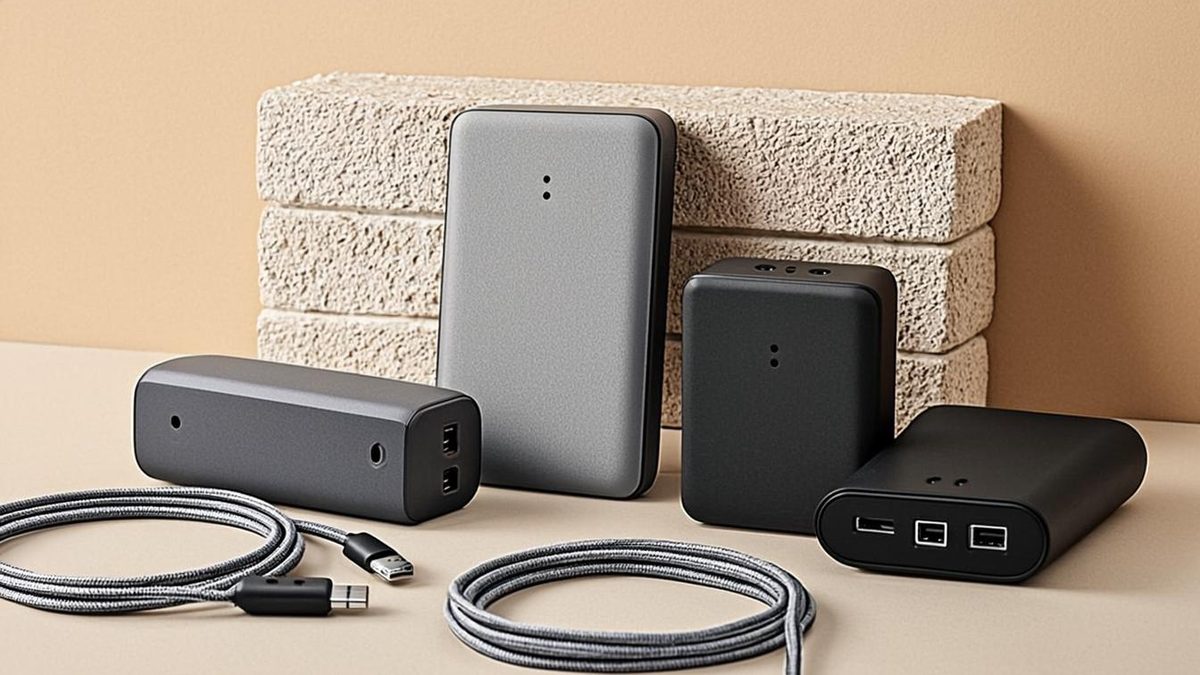
Load-shedding-proof charging: every power bank we stock, from a $15 Porodo to a 80,000mAh monster, what the mAh numbers really mean, and the chargers that fill them fast.
Quick answer
Power banks at Hayaan Market run from $15 (Porodo 5,000mAh) to $65 (Green Lion Thunder 80,000mAh), with 10,000mAh daily-carry models from Porodo, Maxvolt and Aston at $22–$26 and premium Anker units at $45–$48. Fixed USD prices, paid via EVC Plus, Edahab or card, delivered to your Mogadishu district for $1.50–$3.00.
When the lights go, the phone is the last thing standing — until its battery dies too. In Somalia a power bank is not a gadget, it is infrastructure: it keeps the phone that runs your mobile money alive through the evening, keeps the family connected through an outage, and turns any café table into a charging point. This guide walks through every power bank Hayaan Market stocks right now, what each one is for, and the charger that fills it fastest.
What does a power bank cost in Somalia right now?
The live ladder at the time of writing:
- Budget top-up tier — $15–$26. The Porodo 5,000mAh with Lightning cable built in at $15 is the classic pocket unit; the Porodo Pocket Volt 10,000mAh at $22, the Maxvolt 10,000mAh at $24, the Porodo Chrome Volt 10,000mAh at $25 and the Aston MagSafe 10,000mAh at $26 all hold a full day of phone charging.
- Premium daily tier — $45–$50. The Anker Zolo 10,000mAh at $45 and Anker MagGo 10,000mAh at $48 are the reliability picks — Anker's cells and circuitry age better than any budget brand. The Lion Ultra-Thin 20,000mAh 120W at $49.90 jumps tiers entirely: laptop-grade capacity and output in a slab you can still pocket.
- The big tank — $65. The Green Lion Thunder 80,000mAh is not a pocket accessory; it is a shop counter, wedding marquee or extended-outage reserve that refills dozens of phones before it asks for a wall socket.
Prices are fixed USD, no VAT, and the exact figure is printed on every listing before you order.
How many mAh do you actually need?
Manufacturers advertise capacity generously, so use honest math:
- 5,000mAh — the pocket spare. Roughly one full refill for a modern phone. Enough for an evening out or a short cut; not enough as your only backup.
- 10,000mAh — the daily driver. Two to three refills for most phones. This is the right size for one person's whole day of load-shedding, and it still fits a jacket pocket. Most buyers should start here.
- 20,000mAh+ — the household reserve. Four to six phone refills, or a couple of phone refills plus a laptop top-up over USB-C. The 20,000mAh 120W Lion is the sweet spot for families and field workers.
- 80,000mAh — the institution. For kiosks, wedding marquees, clinics and anywhere a dozen people will ask "do you have a charger?" — the Green Lion Thunder answers yes, all day.
Don't forget the charger — watts decide speed
A big bank with a weak wall charger refills overnight. Match it properly:
- Adaptor USB-C 25W PD — $4.50, the budget fast-charge workhorse.
- WiWU Helix 65W Fast Charger — $18, refills the bank and a laptop from one brick.
- Apple 20W USB-C Power Adapter — $25, the original option for iPhone users.
- Anker Prime 100W 3-Port GaN Wall Charger — $65, the desk command center: bank, phone and laptop at full speed simultaneously.
Rule of thumb: a 20W+ charger refills most phones in about two hours, and the same charger will bring a 10,000mAh bank back overnight instead of in a day and a half.
Power cuts: what a power bank can and can't do
A bank keeps phones, earbuds, and USB-powered routers alive — that covers money, calls and often the internet. It will not run a TV, a fridge or an air conditioner. For the things it can't carry:
- Protect sensitive electronics from unstable voltage with the Lightwave Digital Voltage Stabilizer at $65 — cheap insurance for compressors and screens.
- Keep the home internet up through short cuts: the Wi-Fi router guide covers which routers pair well with a USB power bank.
- For the big appliances, the air conditioner guide explains sizing and the stabilizer pairing.
Why buy the bank online instead of the street kiosk?
Because capacity is the easiest number to fake. A kiosk "20,000mAh" unit that costs $10 is almost always a relabeled 2,000mAh cell. Every Hayaan listing names the exact model with real photos and a fixed price — the how-it-works guide covers the whole flow — and your payment goes through the documented checkout, not a personal wallet.
Ready to order?
Start in the power & charging category: pick the capacity tier that matches your day, add a fast charger, and check out. Delivery to your Mogadishu district runs $1.50–$3.00 and a flat $6.95 nationwide — the exact fee appears at checkout before you pay. If you're kitting out a shop or office, the bulk quote form usually beats listed prices.
Frequently asked questions
How much does a good power bank cost in Somalia?
At Hayaan Market, $15 buys the Porodo 5,000mAh, $22–$26 covers 10,000mAh daily-carry models (Porodo, Maxvolt, Aston), $45–$48 buys premium Anker 10,000mAh units, and $65 gets the Green Lion Thunder 80,000mAh.
How many mAh do I actually need?
5,000mAh tops a phone up about once; 10,000mAh recharges most phones two to three times and rides out a day of cuts; 20,000mAh and above covers multi-day outages and can fast-charge laptops with the right cable.
Are the Anker and Porodo power banks original?
Every Hayaan listing states the exact model and condition with real photos and a live stock count, and your payment runs through the secure hosted checkout — a documented purchase, not a street gamble.
How long does a power bank take to charge a phone?
A 10,000mAh bank paired with a 20W or faster charger refills most phones in roughly two hours; the bank itself recharges fastest from a wall adapter of 18W or more, so pair it with one.
Do you deliver power banks outside Mogadishu?
Yes — delivery is priced per district inside Mogadishu ($1.50–$3.00) and costs a flat $6.95 anywhere else in Somalia. The exact fee shows at checkout before you pay.